The Green Cross Detour: Assembling a Villa First-Aid Kit for Italy
You have booked the villa, argued about the airport, and made a mental note to buy more sunscreen. The first-aid kit is probably not top of the list. That is fine until someone scrapes a knee on the pool steps or wakes up with a mosquito bite the size of a fifty-pence piece. In Italy, a small problem does not have to become a lost afternoon. A little planning, and a working knowledge of the local farmacia, keeps things in perspective.
Start with what you actually reach for at home
Do not build a miniature hospital. Think about the last year of ordinary family life: the plasters, the children's paracetamol, the antihistamine you took after a wasp got too close to the pub garden. A villa week has its own rhythm, though. Sun, insects, a hot kitchen, a pool, and a fair amount of walking. Pack for those things, not for a polar expedition.
Keep the kit small enough to live in a cupboard rather than a suitcase. Medicines should travel in hand luggage if you can, in their original packaging. Heat is not kind to tablets, so do not leave the bag by the pool or in a parked car.
What to bring from the UK
Bring the brands and formats you understand, especially if you are travelling with children. Paracetamol and ibuprofen in adult and child versions, an antihistamine, rehydration sachets, plasters, blister plasters, antiseptic cream, tweezers, and a digital thermometer cover most of the ordinary stuff. Add high-factor sunscreen, after-sun, and insect repellent. If anyone takes a regular prescription, bring enough for the trip plus a few days, keep it in the original box, and carry a copy of the prescription. For controlled medicines, a doctor's letter is sensible.
You can buy much of this in Italy, and sometimes more cheaply. But arriving with the basics means you are not hunting for a pharmacy on the first evening, when everyone is tired and the villa kettle has not been found yet.
The farmacia, decoded
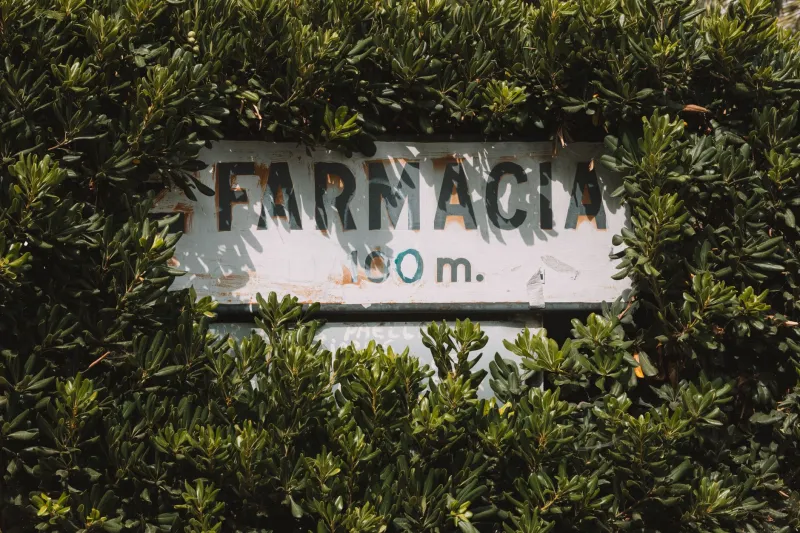
Italian pharmacies are marked by a green cross. They are not self-service shops in the Boots sense. You go to the counter, explain what is wrong, and the pharmacist decides what to offer. Many pharmacists speak some English, especially in tourist areas, but a few simple phrases help: 'Ho mal di testa' for a headache, 'Ho mal di stomaco' for a stomach ache, 'Mi sono scottato' for sunburn, 'Ho una puntura d'insetto' for an insect bite, and 'Ho la febbre' for a fever. If you are asking for children, say the age and weight if you can.
Opening hours vary. In smaller towns, the pharmacy may close for lunch and shut early on Saturdays. Look at the door for the turni, the rota showing which nearby pharmacy is open out of hours. In resort areas, summer hours are often longer. Do not assume the one by the piazza is open on a Sunday afternoon.
Prescriptions and GHIC: the bits worth knowing
A UK prescription cannot simply be filled in Italy. If you need a prescription-only medicine, you will usually need to see an Italian doctor. Your GHIC card gives you access to state healthcare on the same basis as an Italian resident for medically necessary treatment, but it is not a substitute for travel insurance. Carry the card, keep your insurer's details to hand, and remember that repatriation is not covered by GHIC.
If you lose or run out of regular medication, the pharmacy can advise, but replacing a UK prescription may mean a doctor's appointment. That is another reason to pack the extra strip and keep the paperwork.
Sunburn, bites and small fevers
Sunburn is the classic villa mistake. Cool showers, plenty of water, after-sun, and paracetamol or ibuprofen help. If there is blistering, dizziness, or a fever, get advice rather than toughing it out. Insect bites respond well to an antihistamine and a cold compress; watch for spreading redness or swelling. For a child's fever, use a thermometer, offer fluids, and ask the pharmacist about the right dose by weight. Do not guess with children's medicines. A baby under three months with a fever needs medical advice promptly.
For a kitchen cut, clean it, apply antiseptic, and cover it. For a dodgy tummy, rehydration sachets are more useful than reaching straight for anti-diarrhoeals, especially with children.
The kit, assembled
A sensible villa first-aid kit looks like this: paracetamol, ibuprofen, child versions if needed, antihistamine tablets, rehydration sachets, plasters and blister plasters, antiseptic cream, tweezers, thermometer, sunscreen, after-sun, insect repellent, and any regular prescriptions. Add a small note with emergency numbers and the nearest pharmacy. Buy the bulky stuff, like large water bottles and mosquito plug-ins, when you arrive.
A small detour, not a lost day
Ask your villa host or manager for the nearest farmacia and the guardia medica, the out-of-hours doctor service. Save the addresses before you need them. In an emergency, 112 is the European emergency number. For the ordinary scrapes and stings of a villa week, the green cross is usually the right first stop. A short detour on the way back from the market is a lot better than an afternoon spent worrying.