Wide-Angle Warnings: A Sceptic's Guide to Italian Villa Listings
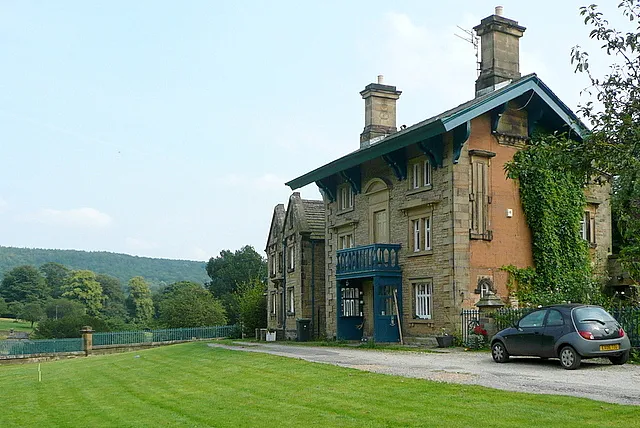
Photo: Graham Horn, CC BY-SA 2.0, via Wikimedia Commons
The listing is a sales document, not evidence
Italian villa listings are written by people who want you to book, photographed by people who know how to make a small bathroom look generous, and read by Brits who have been burned before. The result is a genre of creative writing almost as old as the hill towns themselves. You are not being paranoid. You are being a sensible traveller with a deposit to protect.
The good news is that listings leave clues. Look closely enough and the wide-angle lens, the creative map-reading and the phrase sea glimpse will all reveal themselves before you commit.
Start with the lens, not the view
Wide-angle photography is not a crime, but it is a technique. Look for curved door frames, warped floor tiles and a foreground table that looks the size of a dining table but is probably a side table. Check the bed against the door height or the plug sockets. If the bed appears enormous and the room appears vast, ask for the room dimensions. If every photo is taken from a corner at chest height, assume the room is smaller than it looks.
Look for repetition, too. A villa with twelve photos of the same olive tree and none of the second bathroom is telling you something. Ask for a recent phone video, unedited, walking from the front door to the pool. Owners who are proud of the place usually send it without a fight.
A sea view is a legal phrase, not a promise
In Italy, vista mare can mean a wide blue horizon or a thin stripe visible if you lean over the balcony and squint past the neighbour's satellite dish. Use satellite maps and Street View to see what sits between the villa and the coast. Measure the distance on the map, then check the elevation. A sea view from a hill town is often beautiful, but it may also come with a steep drive and a lot of steps.
Ask for a photo taken at standing eye level on the terrace, with a phone, no zoom. Ask for a ten-second video panning left to right. Drone shots show the coastline; they do not show what you will see from the breakfast table. Check the orientation, too. West-facing means sunsets and afternoon heat; east-facing means morning sun and perhaps a cooler terrace in the evening.
Ten minutes from the beach could mean ten minutes by car
Listing language is slippery. Short drive, easy access and close to amenities can all mean different things. Check the walking route on a map, not just the distance. Italian hill towns are charming and vertical. An unlit lane with no pavement is fine for a daytime stroll and less fine after dinner.
Ask the owner for the gradient, the number of steps and whether the nearest restaurant is genuinely walkable. Ask about parking: private, gated, narrow access, or a space that disappears when the village fills up. If the villa is inside a limited traffic zone, you need to know before you arrive with a hire car and a hopeful expression.
Road noise, church bells and the dawn chorus
Zoom in on the map for main roads, train lines and anything that looks like a shortcut. A photo can hide a road behind a hedge. Ask for a thirty-second video at the bedroom window at 8am and 8pm, with no music. Ask directly about church bells, dogs, tractors, mopeds and nearby bars. Reviews often mention noise, but owners sometimes do not.
Church bells are charming for a day and relentless by Thursday. If the listing is next to a church, ask which one and whether the bells ring at night. If it is next to a restaurant, ask whether the terrace is used for late dinners. None of this is a reason not to book. It is a reason to pack earplugs and choose the back bedroom.
Pool privacy is not the same as a private pool
Private pool means the pool is not shared with other guests. It does not mean the pool is secluded. Ask for four photos standing at the pool looking outward, one in each direction. Check for neighbouring windows, hedges, fences and roads. Ask about the pool dimensions, depth, steps, heating cost and cleaning schedule. If there are small children in your group, ask whether the pool can be fenced and whether the gate locks.
A pool that is overlooked by the owner's house may still be lovely, but you should know before you book. The same goes for the terrace. If the listing boasts a panoramic terrace, ask whether it is private to your villa or shared with the family next door.
How to interrogate an owner without being a nuisance
Ask specific questions and read the replies carefully. Vague answers are information. If you ask for a photo from the terrace and receive a drone shot of the valley, that tells you something. If you ask about road noise and are told it is very quiet, ask for the video. If you ask for the nearest restaurant and are sent a link to a place three villages away, adjust your expectations.
A video call walkthrough is worth more than a gallery of styled photos. Ask for the exact address or a plus code before you pay the deposit; some owners will refuse until you book, but many will at least name the nearest landmark. Check the contract for tourist tax, cleaning fees, air-conditioning charges, linen and check-in times.
The sceptic's pre-booking checklist
Before you pay, confirm: the view from eye level, not from a drone; the walking route and gradient to the nearest shop or restaurant; the road and rail noise; the pool privacy and fencing; the church bell situation; the parking arrangement; the air-conditioning and wifi; the extra fees; and the cancellation terms. Ask for a short video from the bedroom window and the pool. If the owner cannot provide it, decide whether you are comfortable with the uncertainty.
A little scepticism is not the enemy of a good holiday. It is how you end up with a villa that looks like the photos, rather than a week spent wondering where the sea view went.