Market First, Pool Later: Italian Villas Where the Weekly Shop Sets the Pace
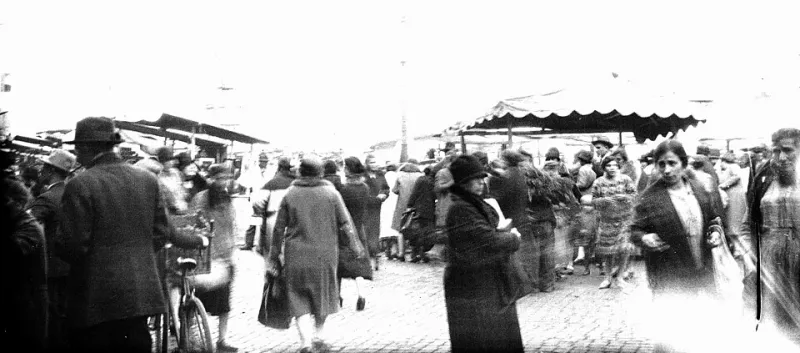
Photo: Unknown, CC BY 4.0, via Wikimedia Commons
The best villa mornings do not begin with a car key. They begin with a cloth bag, a bit of cash and a ten-minute walk into town while the air is still cool. By the time you come back, you have tomatoes that smell of the vine, a loaf still warm through the middle and a vague plan for lunch that will almost certainly involve more cheese than you intended.
That is the appeal of a villa within walking distance of a proper weekly market. Not a souvenir stall with fridge magnets and limoncello in novelty bottles, but the real thing: local producers, seasonal produce, a butcher who knows what to do with a piece of pork, and a queue of people who live there. For summer 2026, if you are booking a villa and want to rely on the car a little less, this is a good place to start.
What counts as walking distance
Be sceptical of the phrase 'near the market'. Near can mean a five-minute stroll or a twenty-minute climb up a hill with no pavement. Check the route on a map and ask the owner about the walk. In hill towns, the market square is often at the top. That is fine for a morning expedition, less fine with a hangover and a full shopping bag.
Aim for ten to fifteen minutes on foot, ideally with a reasonable pavement or a quiet lane. Ask about street lighting if you plan to go out for dinner, and ask whether the return walk is uphill. In July and August, an early start is not just a virtue; it is a survival strategy. Markets tend to wind down by midday, and the best produce goes first.
Greve in Chianti, Tuscany
The Saturday market in Greve in Chianti is the kind of thing that can organise a whole week. The main square is handsome, the stalls are serious about cheese and salumi, and the surrounding streets make for a pleasant wander. Look for a villa on the edge of town rather than out in the vines. You want to be able to walk in for bread and peaches without turning it into a military operation.
Buy pecorino, tomatoes, courgettes and a bag of small, sweet onions. Add a loaf of unsalted Tuscan bread and some good olive oil. If you are doing a British-style breakfast, pick up eggs and pancetta; the latter is not bacon, but it does the job admirably when crisped in a pan. Parking in Greve on market day is not fun. Another reason to leave the car at the villa.
Panicale, Umbria
Panicale is a small hill town with a proper local feel and a weekly market that rewards an early start. Market days can shift, so confirm the current day with your host before you plan the week. The town itself is a pleasure to walk, with views over Lake Trasimeno and a handful of good places for coffee. Look for a villa just outside the walls, close enough to walk in but far enough to have a garden and a pool.
Umbrian markets are good for lentils, vegetables, porchetta and robust cheese. Buy fruit for breakfast and something cured for lunch. If you are feeding children, a box of strawberries and a bag of taralli will buy you a peaceful hour by the pool. The walk back is uphill, so pack light and make the strong member of the party carry the water.
Ceglie Messapica, Puglia
Ceglie Messapica is a handsome whitewashed town in the Valle d'Itria, and its Sunday morning market is a window into local life. Sunday is a good day for it if you are arriving on Saturday and want to stock up before the week begins. Check the day locally, as with any market. Look for a villa on the town's edge, ideally within a walk of the old centre, so you can drift in for coffee and come back with a bag of tomatoes and a piece of caciocavallo.
Puglian produce is a joy in summer: tomatoes that taste of sunshine, bitter greens, olives, taralli and excellent bread. For a British-style breakfast, buy eggs, yoghurt, fruit and a little something cured. If you want bacon, ask the butcher for pancetta or guanciale and adjust your expectations. The coffee will be better than at home, so consider that a fair trade.
Lucca, Tuscany
Lucca is a city rather than a village, but it works beautifully for a market morning. The weekly market is a proper local affair, and the town is flat, walkable and full of places to stop for coffee. Check the current market days with your host. Look for a villa just outside the walls, close enough to walk in through one of the gates. You get the best of both worlds: a garden and a pool, plus a city on foot.
Buy bread, fruit, cheese and vegetables. Lucca is also good for pantry bits: olive oil, honey, dried pasta. If you are doing a British breakfast, add eggs and tomatoes and call it a cooked breakfast with Italian accents. The walk back through the walls is one of the pleasantest shopping trips you will ever make.
Ostuni, Puglia
Ostuni is the white city, and its Saturday market is a lively, practical affair rather than a tourist photo opportunity. The old town is a maze of lanes and steps, so look for a villa on the lower edge of town with a straightforward walk to the market area. Ask the owner for the exact route. Some villas described as being in Ostuni are actually a drive away, which is fine if you know, but not if you are planning to walk.
Buy tomatoes, aubergines, peppers, olives and fruit. Puglian bakeries are excellent, so add a loaf of bread and perhaps a piece of focaccia for elevenses. For breakfast, eggs, yoghurt and fruit will see you right. If you are feeding a crowd, buy double. Market produce has a way of disappearing before lunch.
The British breakfast test
A villa breakfast does not have to be a full English, but it can be a lovely Italian-British hybrid. Buy eggs, pancetta, tomatoes, bread, butter, yoghurt, fruit and coffee. If you find marmalade, so much the better. Mushrooms are easy to find, and a little garlic and parsley will make them feel like a treat rather than a substitute. The point is not to recreate a Tesco aisle in Tuscany. It is to buy well, cook simply and eat outside while the morning is still cool.
Early starts, parking and the rest
Take cash. Not every stall takes a card. Take a bag or two, and a cool bag if you are buying cheese or meat. Go early, especially in July and August. By 10am the best stuff is picked over and the sun is starting to bite. Check market days locally, because they do move, and do not assume Sunday is market day everywhere.
If you are renting a car, use it for the big shop and the day trips, not for the morning bread. The pleasure of a walkable market is that it slows the holiday down. You go in with a vague list, come back with a melon and a conversation about tomatoes, and the day sorts itself out from there. Pool first? No, market first. The pool will still be there when you get back.