Beyond the Pool Shot: Choosing an Italian Villa for Pale Skin and Small Children
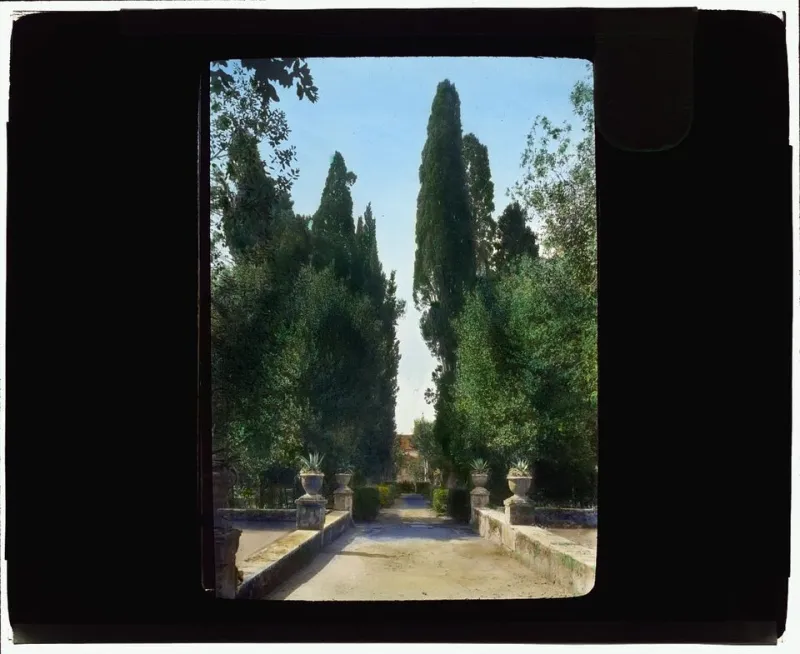
Photo: The Library of Congress, No restrictions, via Wikimedia Commons
The pool shot is the easy part. A rectangle of blue, a row of cypress trees, a glass of something cold just out of frame. But if you are travelling with pale-skinned children, and especially if you are going in July or August, the villa that photographs best is not always the villa that works best.
This is not an argument for a dull holiday. It is an argument for choosing the boring details that make the sunny bits possible: shade at the right time of day, screens on bedroom windows, air conditioning where it matters, a pool you can supervise without holding your breath, and a drive from the airport that does not finish with everyone fraying at the edges.
Start with shade, not the pool
A shaded terrace is not a luxury for a fair-skinned family. It is the difference between eating lunch outside and retreating indoors at noon. Look for a covered loggia, a pergola, mature trees, or a terrace with an awning. Ask which side of the house it sits on and when it is shaded. A west-facing terrace can be lovely at sunset and punishing at 3pm.
Photographs often show shade in the morning or evening. Ask the owner for a midday photo if the listing is vague. In Tuscany and Umbria, a farmhouse with thick stone walls and a shaded courtyard is often more comfortable than a new-build villa with a big, exposed pool deck. In Puglia, masserie with internal courtyards and old stone rooms tend to stay cooler. None of this guarantees comfort, but it helps.
Also check indoor shade. Shutters and external blinds are standard in many Italian villas and do more than curtains. If the listing mentions blackout blinds but not shutters, ask. A siesta in a genuinely dark room is a small thing that makes a large difference to small children.
Screens, shutters and the mosquito question
Mosquito screens are not universal, even in rural Italy. If you are near water, lakes, irrigation channels or lots of greenery, ask directly whether bedroom windows have screens. Some villas have them throughout; others have them in the kitchen and nowhere else. Air conditioning can reduce the need to open windows, but it is not a substitute for screens if you like fresh air at night.
Be sensible rather than dramatic. For most UK families, mosquitoes are an irritation rather than a serious health risk, but a child with a dozen bites is a miserable travelling companion. Pack a plug-in repellent and ask the owner what they provide. If the villa has a pool or garden irrigation, mention it. A quick email before booking is better than discovering the answer at bedtime.
Air conditioning: ask which rooms
Air conditioned can mean a unit in the living room and nothing in the bedrooms. For a family with young children, bedroom cooling is the priority. Ask how many bedrooms have AC, whether it is included in the price, and whether the units are quiet enough to sleep through. Some older villas have fans rather than AC, which can be fine in May or September but less so in a heatwave.
If you are booking in the school summer holidays, treat bedroom AC as close to essential unless you know the property is high up or well shaded. In Sicily and southern Puglia, July and August can be fierce. A villa with a pool but hot bedrooms is not a bargain; it is a week of broken sleep.
Pool safety beyond the fence
A pool fence is not a given in Italy. Many villas have an open pool, sometimes right beside the terrace. If you have a toddler or a non-swimmer, ask about a gate, alarm, cover or fence. Some owners will install a temporary fence for families; others will not. Get the answer in writing.
Look at the pool's shape and depth. A shallow shelf or steps is easier for small children than a sudden drop. Check whether there is a shallow end at all, and whether the ladder is secure. Pool covers can be dangerous if they are not properly fitted, so do not assume a cover equals safety. Supervision remains the main thing, but a fence or gate buys you a few seconds and a little peace of mind.
The distance test
UK parents are used to short hops. A 90-minute transfer after a budget flight, followed by a supermarket stop and a hunt for the key safe, is not the gentle start you imagined. Look at the real driving time from the airport, not the distance in kilometres. Mountain roads and hill towns can turn 40km into an hour.
Then check the everyday distances: nearest shop, nearest restaurant you would actually walk to, nearest beach if that matters, and nearest hospital. A villa that is beautifully remote can be hard work with young children. A villa on the edge of a village, with a bakery and a pizzeria within walking distance, often feels more like a holiday.
Villa types and regions that tend to get it right
A Tuscan casale with a shaded courtyard and a fenced pool is a classic for a reason. Umbria offers similar farmhouse stays with fewer crowds and often more shade. In Puglia, a masseria with thick walls, an internal courtyard and a pool set away from the house can work well, though you may need a car. On Sicily's east coast, villas near Catania or Syracuse often have AC and screens because the heat demands it, but check the pool safety details carefully. A well-run agriturismo in Umbria or Le Marche can also be a good compromise: smaller pools, more shade, and someone on site if something goes wrong.
A short booking checklist
Before you pay a deposit, ask for: a midday photo of the terrace; the number of bedrooms with AC; whether windows have mosquito screens; pool depth and any fence or gate; the real transfer time from your arrival airport; the distance to the nearest shop and restaurant; and whether the owner provides a cot, high chair or pool safety equipment. If the answers are vague, keep looking. The right villa is not the one with the best photos. It is the one that lets you stop managing the holiday and start having it.