The Sizzle Test: How to Vet an Italian Villa for July and August

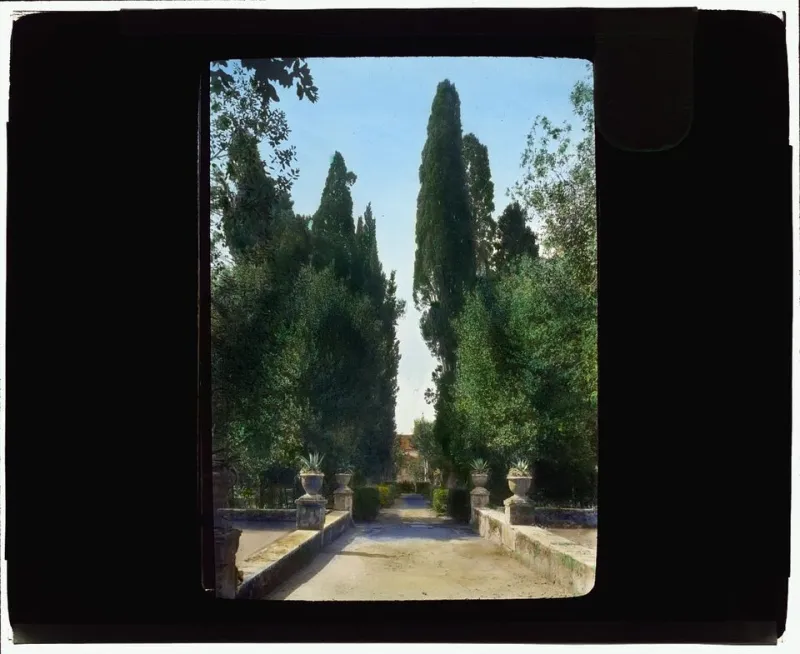
Photo: Internet Archive Book Images, No restrictions, via Wikimedia Commons
Book a villa for July or August and you are effectively buying a promise. The listing shows wisteria in bloom, a pool like a sapphire and a terrace set for aperitivo. What it cannot show you is what the same place feels like at 3pm in a Puglian heatwave, when the stone walls have given up being cool and everyone is lying very still under a ceiling fan.
That is not a reason to avoid high summer in Italy. It is a reason to ask better questions before you commit. A hot Italian summer is glorious when the villa works with the heat rather than against it. The trick is to find out the weak points now, by email, rather than on arrival with a car full of shopping and a tired eight-year-old.
Start with the air conditioning, not the pool
A pool is lovely. Air conditioning in the bedrooms is what saves the holiday. Ask which rooms have units, not simply whether the villa has A/C. A single unit in a corridor is not the same as a unit in every bedroom. Ask for photos of the actual units and check whether they are split systems, portable machines or central cooling. Portable units are better than nothing, but they are noisy and often need a window cracked open, which rather defeats the object.
Then ask about cost. Some owners include A/C in the rental price; others meter it and charge extra at the end of the week. Neither is unreasonable, but you want to know before you budget. Ask whether the units have timers, whether they can run overnight, and whether the electrical supply copes when several are on at once. In older houses, the answer is sometimes no.
Shade is a feature, not a nicety
British travellers often underestimate how much time they will spend hiding from the sun. A villa with a covered terrace, mature trees and shutters is a different proposition from one with a sun-blasted patio and a single parasol. Ask where the shade falls at midday and again at 4pm. Request photos taken at those times, not the soft-focus evening shots from the listing.
Check the indoor shade too. Do the bedrooms have blackout shutters or curtains? Is there cross-ventilation? Are there fans? In hill towns, a breeze can do a lot of work, but do not assume it. If the villa has an outdoor kitchen or barbecue area, ask whether it is shaded. Cooking lunch in full sun is a special kind of punishment.
The pool: temperature, shade and rules
A pool in August can be bathwater-warm, especially if it is shallow and uncovered. Ask whether any part of the pool is shaded during the day and whether the owner has any way of cooling it. Real pool cooling is rare, but shade and depth make a difference. Check the pool cleaning schedule, too. In high season, a pool that is not cleaned regularly becomes less appealing by day three.
If you are travelling with children, ask about pool access, fencing and whether the pool is shared. If water restrictions are in force, ask whether the pool can be topped up and whether the garden can be watered. Nobody wants a holiday lecture on drought, but it is better to know the local rules than to discover them from a note on the kitchen table.
Water, power and the practical stuff
Ask whether the villa is on mains water or a tank, and whether pressure is reliable. In rural areas, a water tank is normal, but you want to know if it is big enough for a full house. Ask about hot water capacity. A villa that sleeps eight but has a small boiler can mean lukewarm showers by the time the last person gets in.
Power is worth a thought, especially if everyone is charging phones, running fans and using A/C. Ask whether there have been outages and whether the villa has a generator. It is not a glamorous question, but it is a useful one. Also ask about insect screens. A villa without them in a hot summer means a choice between mosquitoes and closed windows.
Read the contract for heat-related terms
This is the part most of us skim. Do not. Check the cancellation terms, the balance due date and what happens if the property becomes unavailable. Look for a force majeure clause and read what it actually covers. Some contracts exclude extreme weather; some are vague. Ask directly what happens if a heatwave leads to water restrictions or a failure of the A/C. A good owner will have an answer. A vague owner may still be fine, but you want the answer in writing.
Ask how quickly repairs are handled and whether there is a local contact. If the A/C fails on a Saturday in August, you want to know that someone can come out. Travel insurance is part of this conversation too. Check what your policy covers and do not assume that 'too hot' is a insured event.
The pre-booking checklist
- A/C in every bedroom, with photos of the units
- Whether A/C is included or metered, and how much it typically costs
- Shaded outdoor dining and photos at midday and late afternoon
- Shutters, blackout blinds and fans in the bedrooms
- Pool shade, depth, cleaning schedule and any shared access
- Water supply, tank size, pressure and any local restrictions
- Hot water capacity for the number of guests
- Insect screens on windows
- Cancellation terms, force majeure wording and repair response times
- Recent reviews from July or August, not just May
None of this needs to turn into a forensic correspondence. A short email with five or six questions will usually tell you plenty. The best villas answer clearly and quickly. The ones that dodge the questions are telling you something too.
High summer in Italy is still one of the great pleasures of a British year: long lunches, warm evenings, that first swim before breakfast. You just want the villa to be on your side when the mercury climbs. Ask the sizzle questions now, and the only thing you will be negotiating in August is whether to have another glass of something cold.